What exactly are you paying for at closing when you buy a home in Menifee? If you’re like most buyers, you want a clear, local breakdown so there are no surprises on signing day. You’ll learn what typical buyer closing costs look like in Riverside County, how much to budget, which fees are negotiable, and smart ways to reduce what you pay. Let’s dive in.
Closing costs, simply explained
Closing costs are the one-time fees, taxes, prepaids, and third-party charges you pay in addition to your down payment when your home purchase closes. A useful rule of thumb is to budget about 2% to 5% of the purchase price for buyer closing costs. Your total depends on your loan type, the property, local taxes or assessments, and any seller credits you negotiate.
In Southern California, closings are typically handled by an escrow company with title insurance. Some fees follow local custom, but many items can be negotiated in your purchase contract. Exact amounts vary by lender, escrow, and title provider, so always request written estimates as you go.
What Menifee buyers typically pay
Below are common buyer-side line items for single-family homes and condos in Menifee. These are general ranges; ask your lender and escrow officer for property-specific numbers.
Loan and lender fees
- Origination, application, or processing: often 0.25% to 1% of the loan amount or a flat fee.
- Underwriting and admin: usually $400 to $1,500 combined.
- Credit report: about $25 to $50.
- Appraisal: typically $450 to $800, depending on property size and complexity.
- Discount points: optional. Each point equals 1% of the loan amount and can reduce your interest rate.
Title and escrow services
- Lender’s title insurance: required with a mortgage. Price is based on the loan amount.
- Owner’s title insurance: optional but strongly recommended. One-time premium based on the purchase price.
- Escrow fee: varies by company and price point, often several hundred to over $1,000. Payment is often split by custom or negotiation.
- Recording fees: county charges to record the deed and mortgage documents, typically from a few dozen to a few hundred dollars.
Inspections and reports
- General home inspection: commonly $300 to $800.
- Pest and wood-destroying organism inspection: often $75 to $300. Lenders may require clearance if there is active infestation.
- Specialty inspections: septic, roof, HVAC, pool, sewer scope as needed.
- Natural Hazard Disclosure report: often provided by the seller; additional copies range from $75 to $200.
Prepaids and escrow reserves
- Property tax proration: you reimburse the seller for any taxes they prepaid that cover time after you own the home.
- Prepaid taxes and homeowners insurance: lenders often collect several months of taxes and about one year of insurance at closing.
- Prepaid interest: mortgage interest from the closing date to the first payment date.
Local taxes and assessments
- Transfer taxes and fees: documentary transfer tax varies by city and county. Confirm the current schedule with Riverside County or the City of Menifee for your transaction.
- Mello-Roos/CFD special taxes: many newer Menifee and Riverside County communities have Community Facilities District assessments. These are ongoing annual charges. You may see a prorated amount at closing, and you should budget for the long-term payments.
- Other special districts: lighting, landscaping, or flood control assessments may apply depending on the property.
HOA-related charges
- HOA document or resale certificate: commonly $150 to $400 for the disclosure package. Payment responsibility is negotiable.
- HOA transfer or move-in fees: amounts vary by association.
- Monthly dues and possible reserves: not closing costs in the strict sense, but some HOAs require funds at closing for the upcoming month.
Miscellaneous items
- Survey, if required: generally $300 to $900.
- Notary and courier: usually small and sometimes bundled in escrow fees.
- Attorney fees: not typical in California residential purchases, but possible if you request legal counsel.
How much to budget in Menifee
Planning early helps you write stronger offers with confidence. Use these examples to frame expectations:
- On a $500,000 purchase, 2% is $10,000. This might reflect minimal lender fees, no points, lighter prepaids, and no Mello-Roos.
- On the same $500,000 purchase, 4% is $20,000. That might include appraisal, escrow and title, lender fees, one year of homeowners insurance, a couple of months of tax and insurance reserves, inspection and pest reports, and modest HOA and recording charges.
Totals can exceed 5% if you buy discount points or need large escrow reserves. They can drop if you receive seller credits or lender credits.
Timeline, disclosures, and what to expect
- Loan Estimate: After you apply for a mortgage, your lender must provide a Loan Estimate within three business days. This outlines your estimated closing costs and loan terms.
- Closing Disclosure: Your lender must deliver a final Closing Disclosure at least three business days before closing. Review it carefully and compare it to your Loan Estimate.
- Escrow and title: The escrow company coordinates document signing, funds, title insurance, prorations, and county recording.
- California disclosures: You will see the Transfer Disclosure Statement, Natural Hazard Disclosure, and other state-required forms.
- Typical timing: Many Inland Empire purchases close in about 30 to 45 days, depending on loan processing, inspections, and repair negotiations.
Menifee and Riverside specifics to check
- Mello-Roos/CFDs: Newer subdivisions around Menifee often include special taxes that vary widely. Review the seller’s disclosures and county tax records to confirm current amounts and the remaining term.
- Proposition 13 and property taxes: California typically sets base property tax close to 1% of assessed value, plus voter-approved bonds and special assessments. Your assessed value usually resets at purchase. Confirm proration and payment schedules with county offices.
- Transfer taxes: City and county transfer tax rules can change. Verify whether your specific Menifee or Riverside County transaction has a documentary transfer tax and how it is shared between buyer and seller.
- Local custom on fees: In Southern California, it is common to use escrow and title, and some fees are split by custom. Negotiation can shift who pays certain items, so confirm in your purchase contract.
Ways to reduce your out-of-pocket
- Compare Loan Estimates: Request itemized quotes from more than one lender. Look at both rate and fees. Ask about lender credits and how they affect your payment versus cash to close.
- Negotiate seller credits: Build a credit toward closing costs into your offer when appropriate and within your loan program limits.
- Shop escrow and title: Where allowed, compare fee schedules for small but meaningful savings.
- Consider points carefully: Buying down your rate can make sense, but only if it aligns with your time horizon in the home.
- Confirm Mello-Roos early: A surprise special tax can affect your monthly budget. Knowing early lets you adjust your offer strategy.
- Plan for inspections and repairs: Budget for the inspection phase and use your findings to negotiate repairs or credits.
- Scrutinize the Closing Disclosure: Use the three-day review window to question any unexpected changes with your lender and escrow officer.
First-time and finance-sensitive buyers
If you are a first-time buyer or working with a tight budget, ask about statewide and local assistance options that may apply to you. Programs from agencies like the California Housing Finance Agency and county or city housing departments can provide down payment or closing cost help for eligible buyers. Your lender can help you understand program limits, required classes, and how assistance integrates with your mortgage.
What you will pay versus the seller
Who pays which fee depends on the purchase contract and local custom. Sellers usually cover real estate commissions. Buyers typically cover lender-related costs, appraisal, inspections, and most prepaids. You can propose that the seller contribute a credit toward your closing costs, subject to loan program rules.
What to expect at signing
- You will review the Closing Disclosure and escrow package, including loan documents and title insurance details.
- You will wire your cash to close per secure instructions from escrow. Always verify wire instructions by phone with your escrow officer.
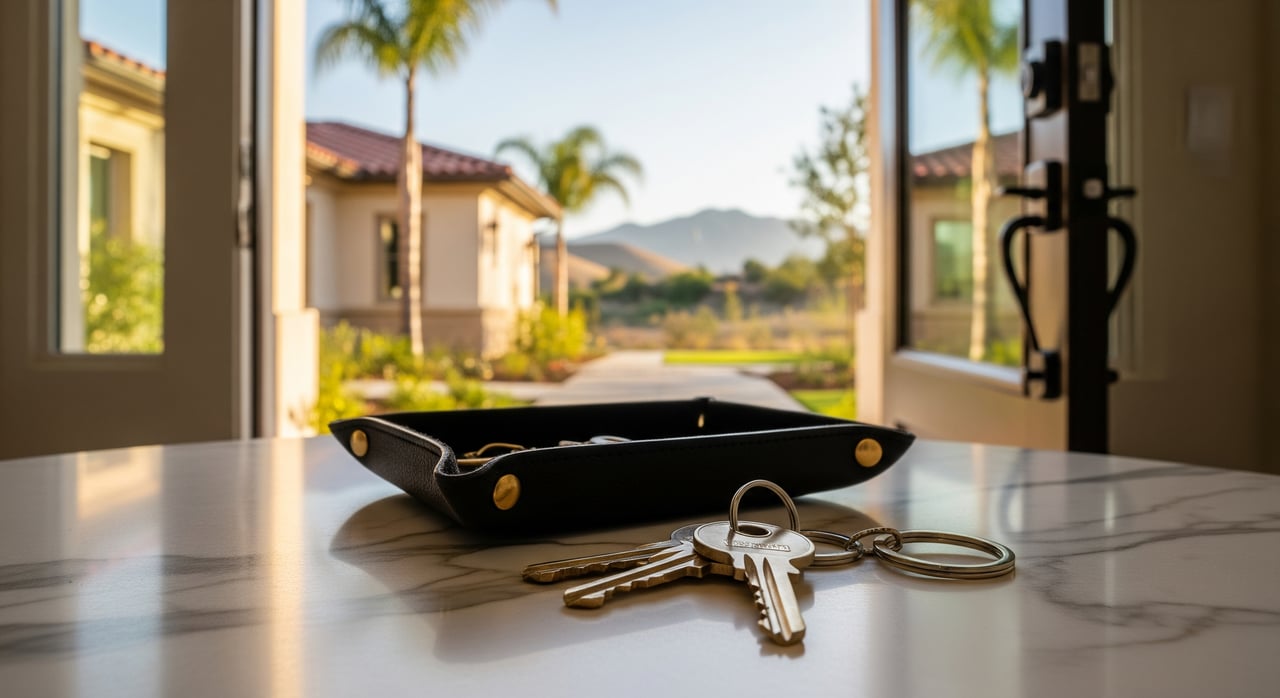
- After both parties sign, the lender funds, and the county records the deed, you receive keys and official ownership.
How our integrated team helps
When your agent and lender are on the same page, you get clarity and speed. With a coordinated approach, you can:
- See accurate, up-to-date cash-to-close numbers as the deal evolves.
- Time inspections and appraisals to protect contingencies and avoid rush fees.
- Identify opportunities to negotiate seller credits that fit your loan program.
- Align your closing date with funding and recording to manage prepaid interest and reserves.
If you want a step-by-step plan for your Menifee purchase, we can help you compare scenarios and credit options so you know exactly what to expect on day one and beyond.
Ready to run your numbers?
Every property and loan is different, but you should never walk into closing uncertain. If you share a target price range, we will outline a side-by-side estimate that includes loan fees, escrow and title, prepaids, and any Mello-Roos or HOA items we can identify from disclosures. Then we will help you shape a negotiation strategy that fits your budget.
Have questions about a specific Menifee property or development? Reach out to Unknown Company. Let’s talk through your goals and build a clear path to the keys.
FAQs
What are typical closing costs for Menifee buyers?
- Plan for about 2% to 5% of the purchase price, depending on your loan, prepaids, assessments, and any seller or lender credits.
Which closing costs can I negotiate in Menifee?
- You can often negotiate seller credits, how escrow fees are split, and whether the seller covers certain HOA document fees, subject to loan program limits.
Do Menifee homes have Mello-Roos taxes?
- Many newer communities in Riverside County use Community Facilities Districts, so some Menifee homes have Mello-Roos. Check seller disclosures and county tax records for the exact amount and term.
When will I see my final cash to close?
- Your lender must provide a Closing Disclosure at least three business days before closing that shows the final cash-to-close figure.
Are my closing costs tax deductible?
- Many closing costs are not deductible. Some items, like mortgage interest and property taxes, may be deductible. Consult a qualified tax professional for advice specific to your situation.